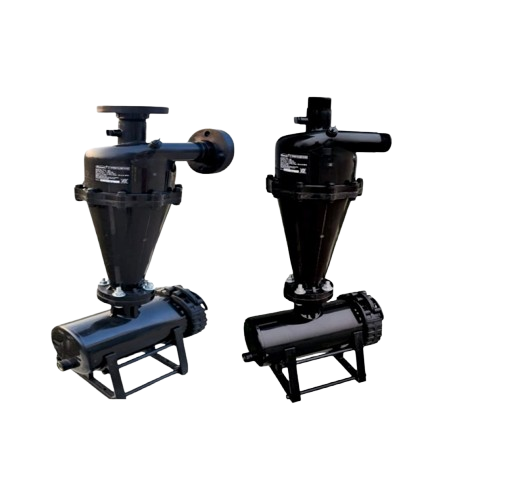
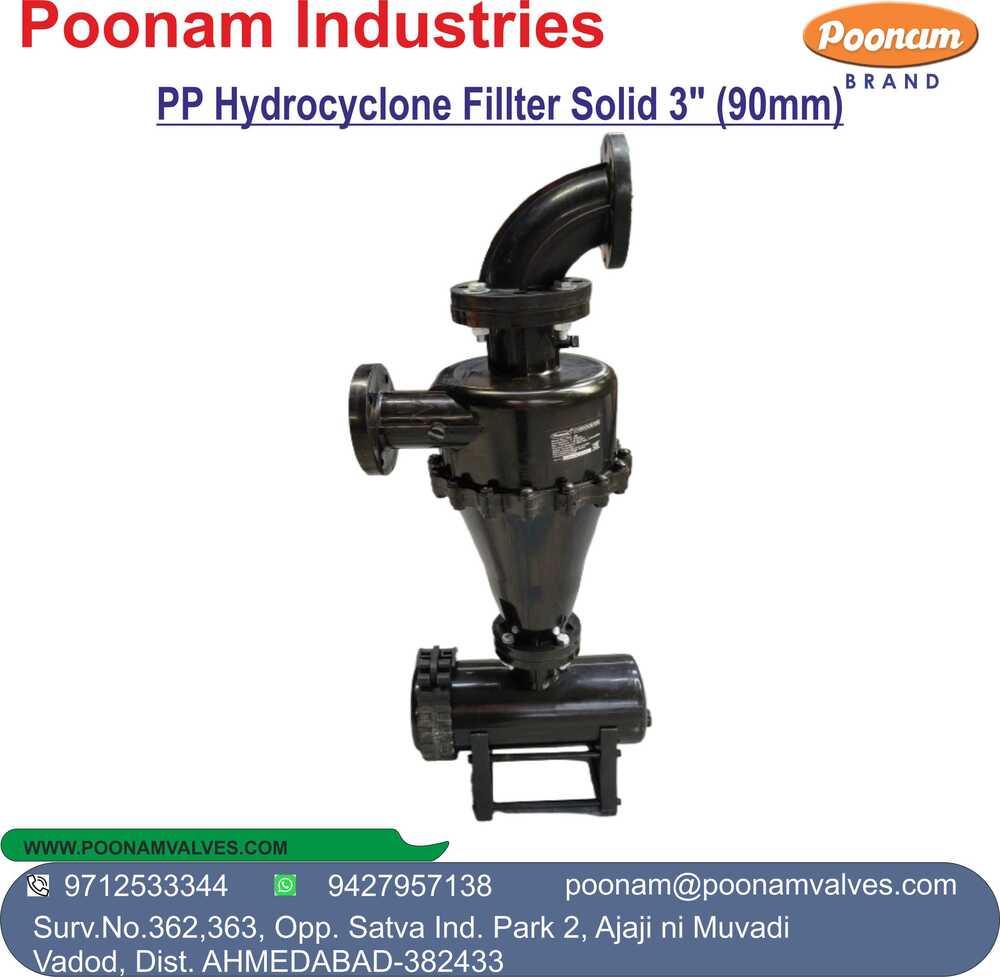
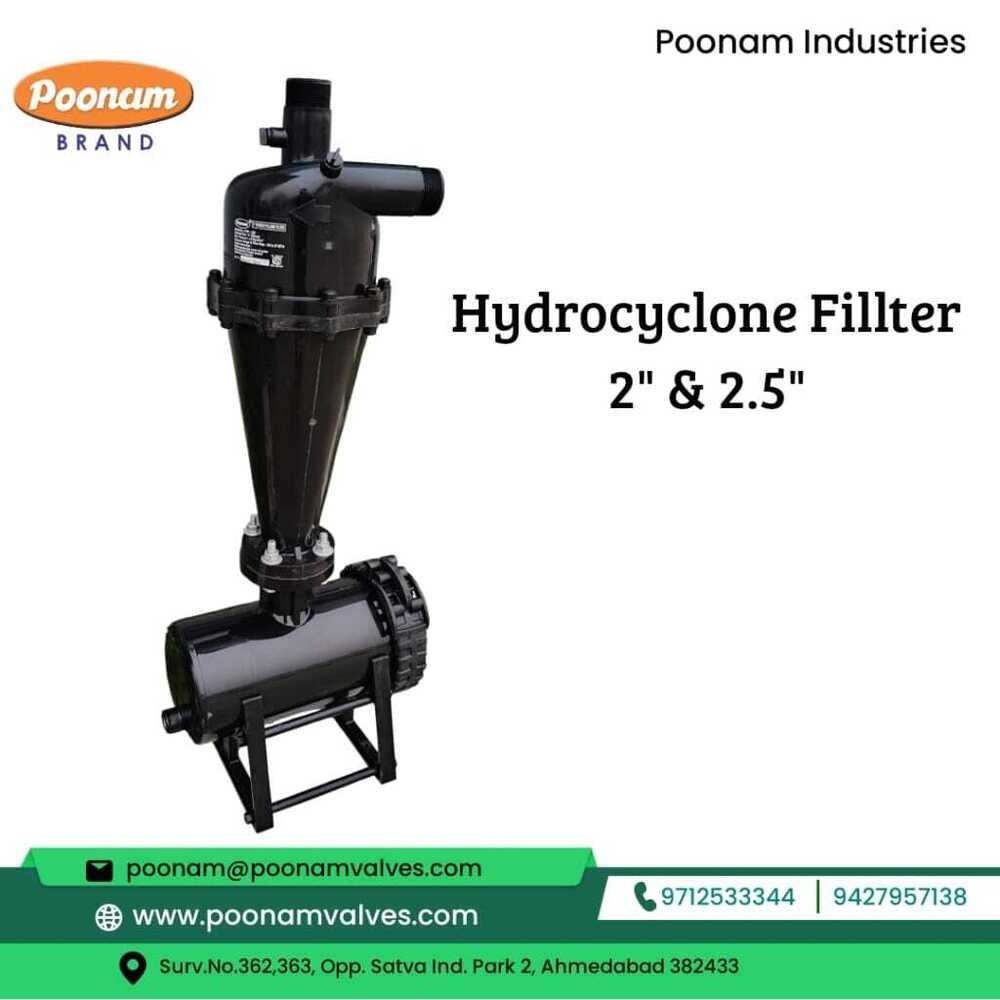
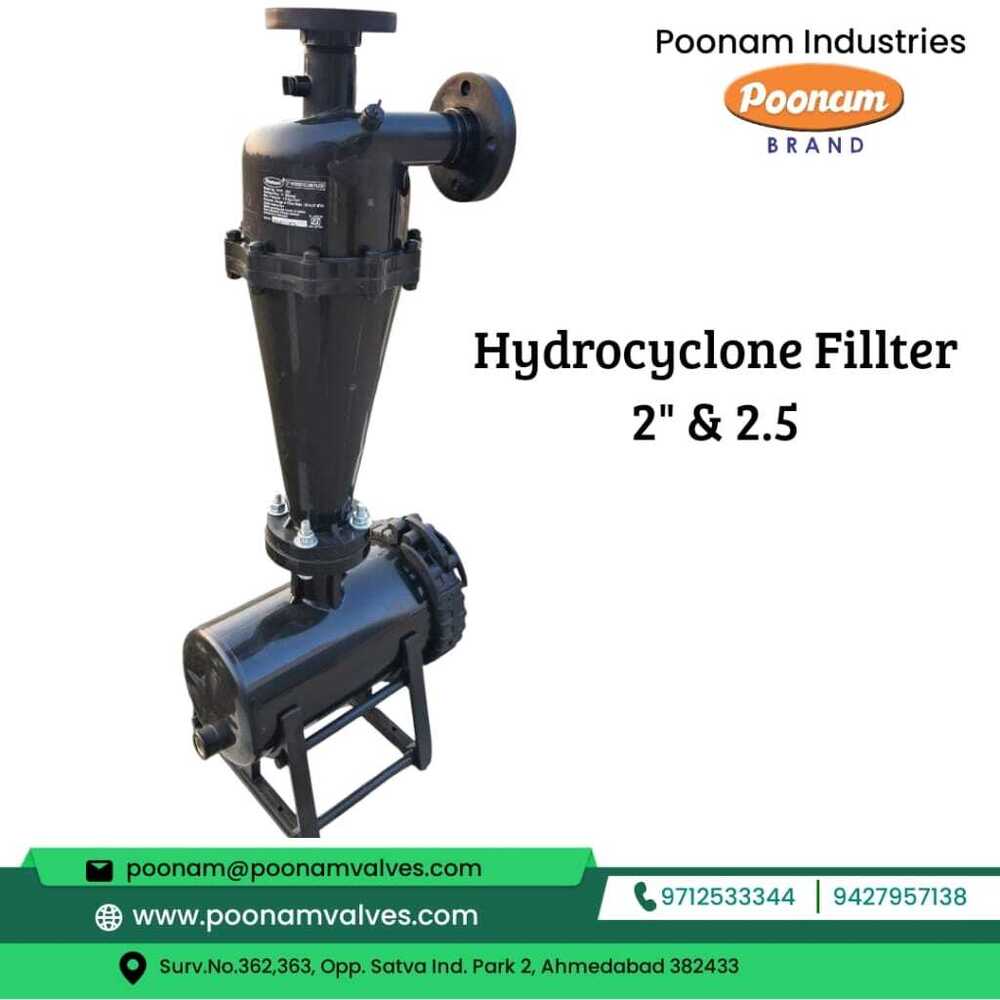
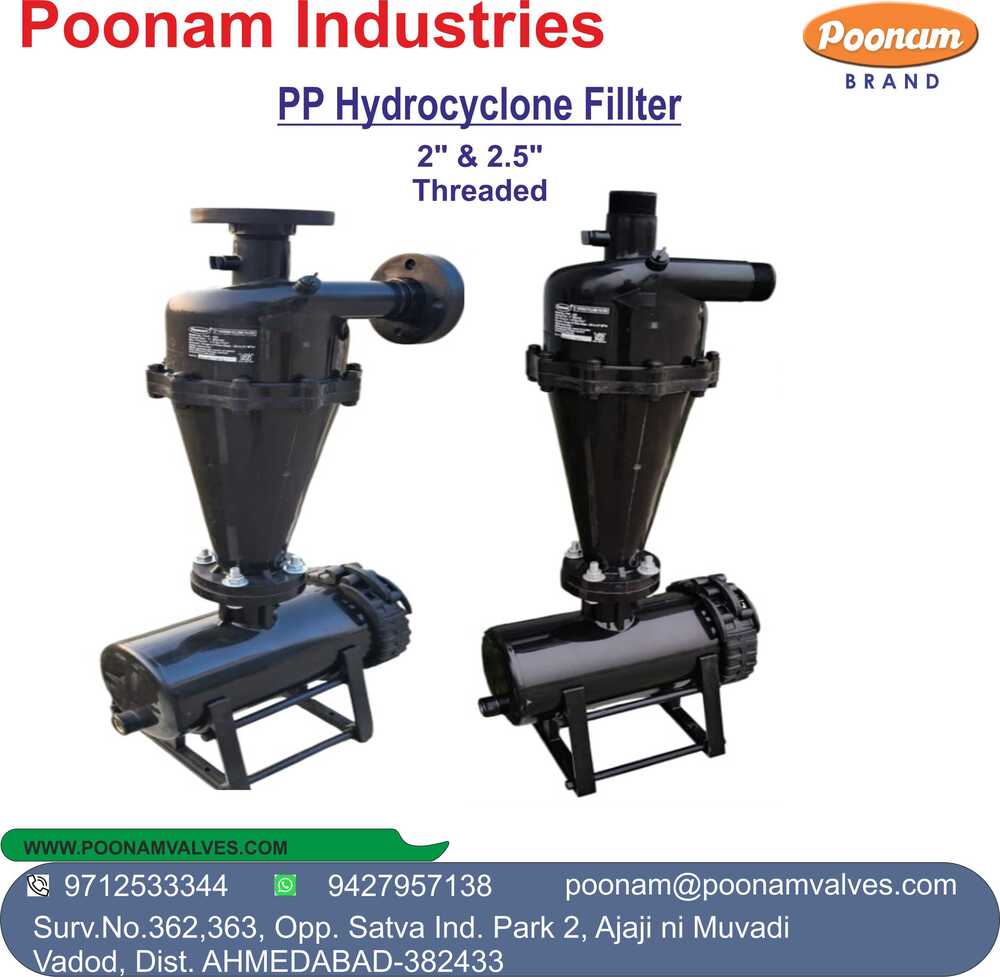
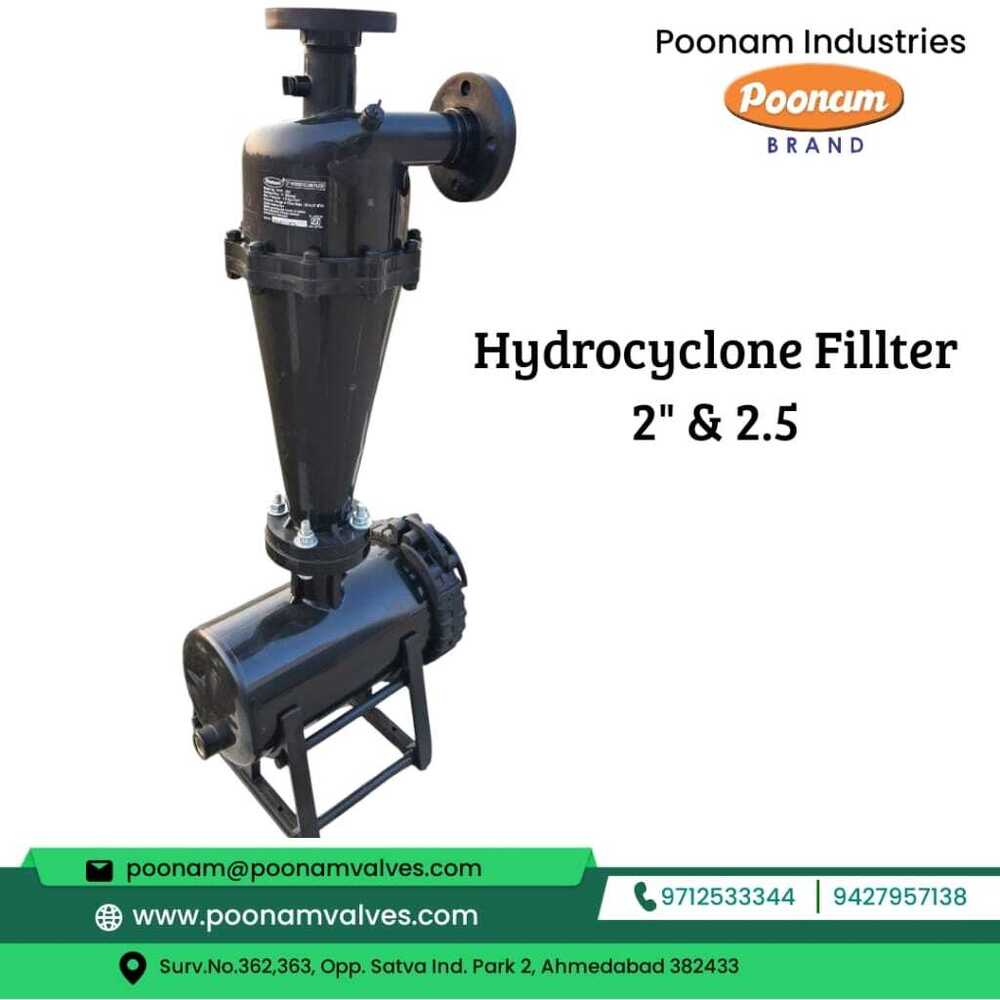
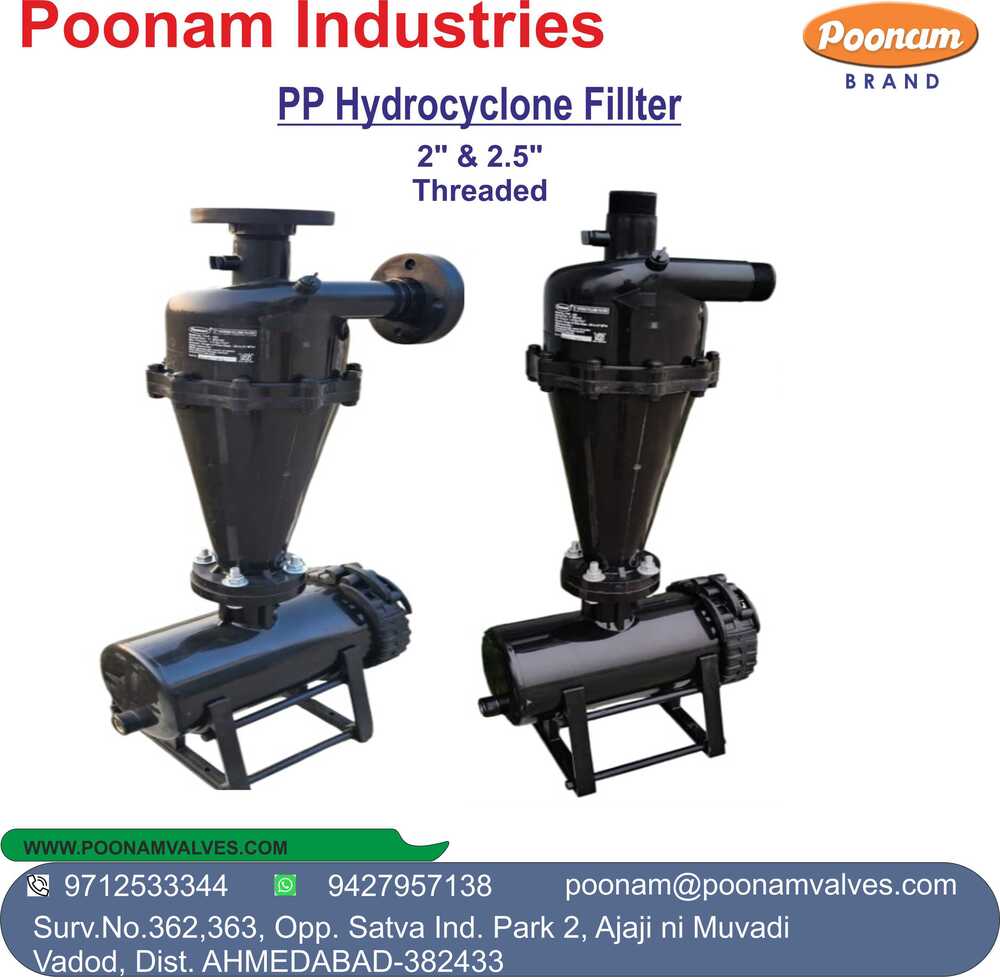
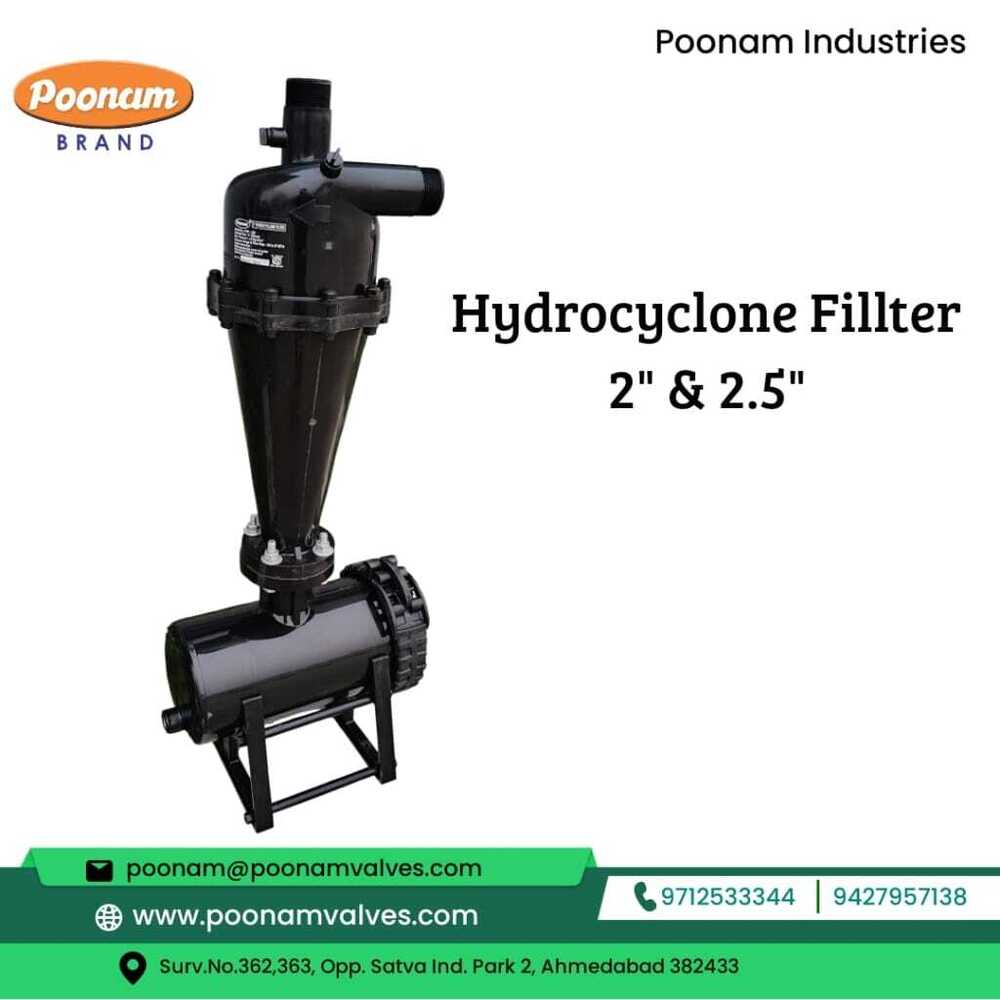
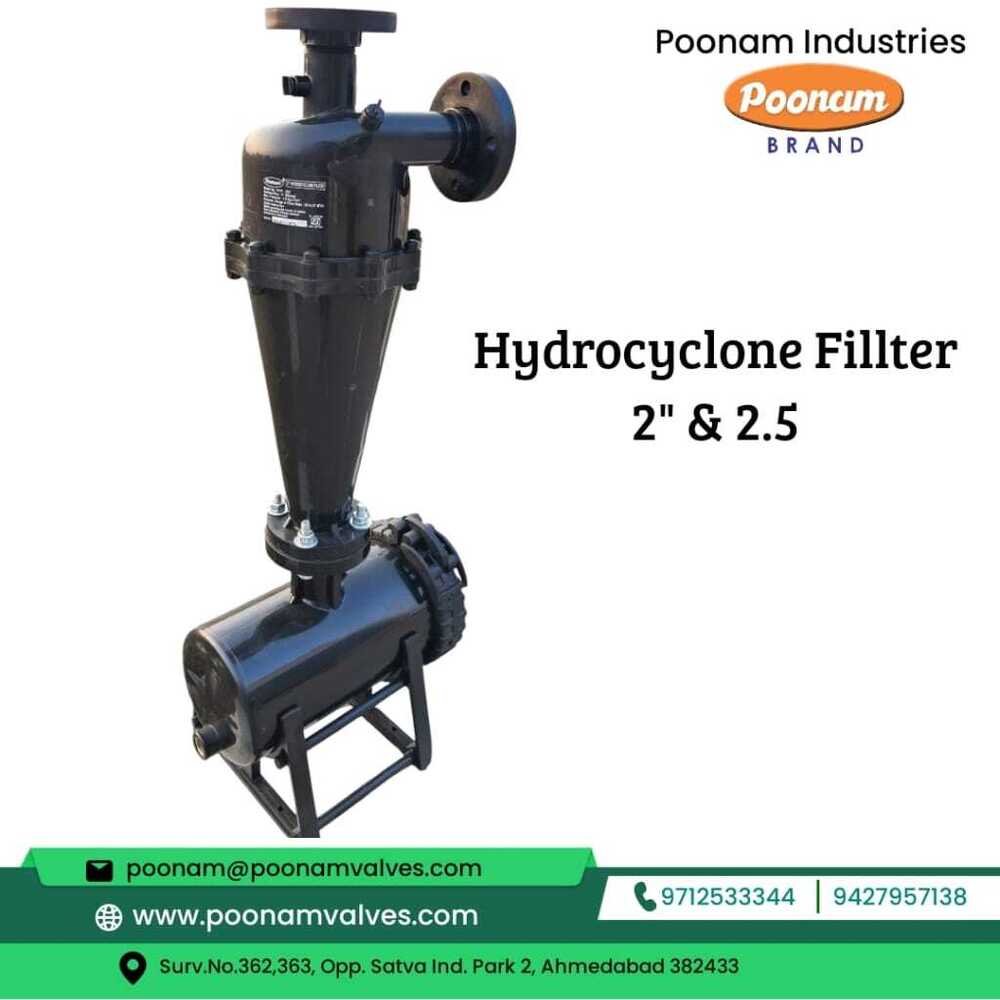
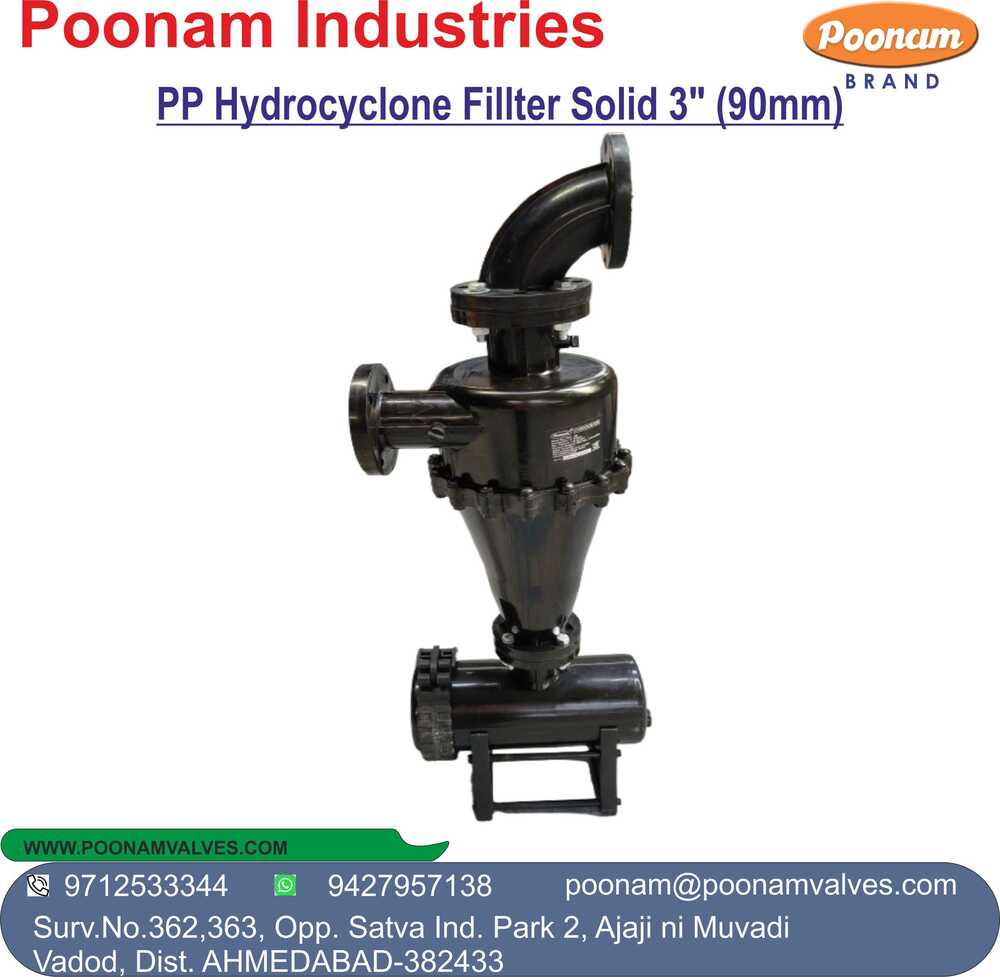
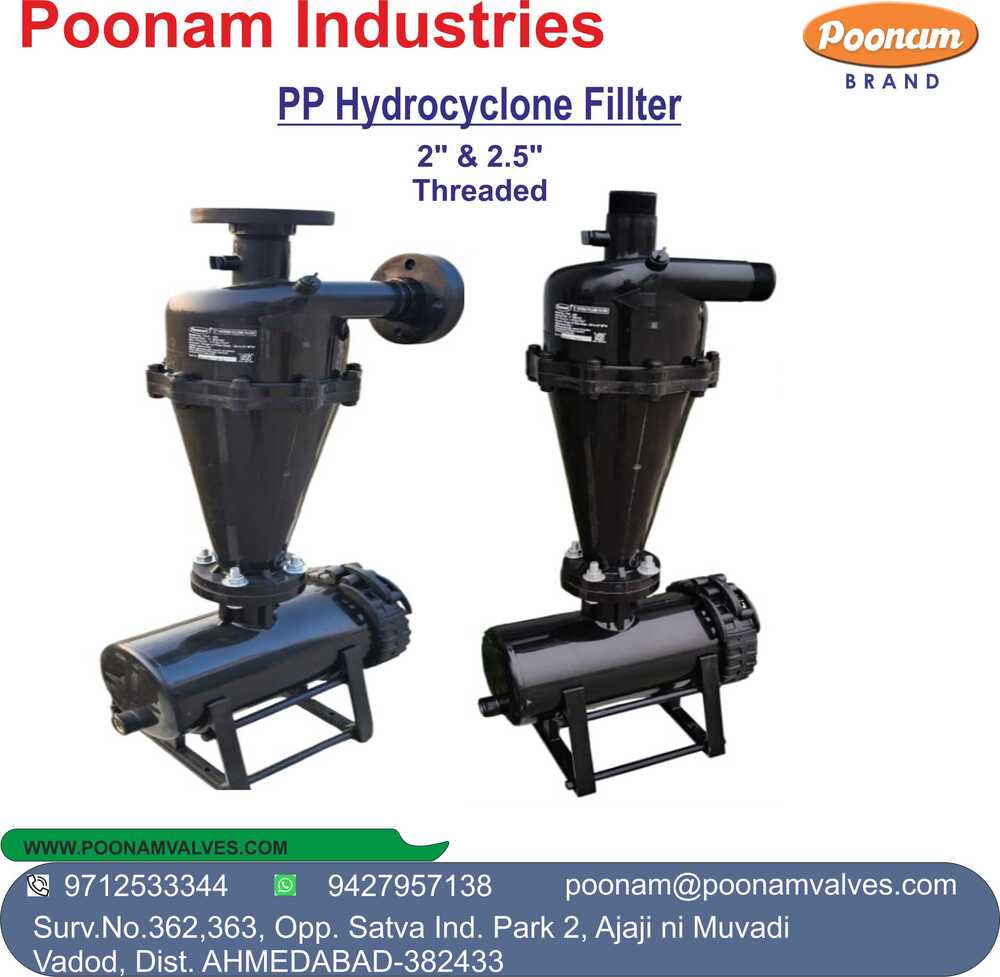
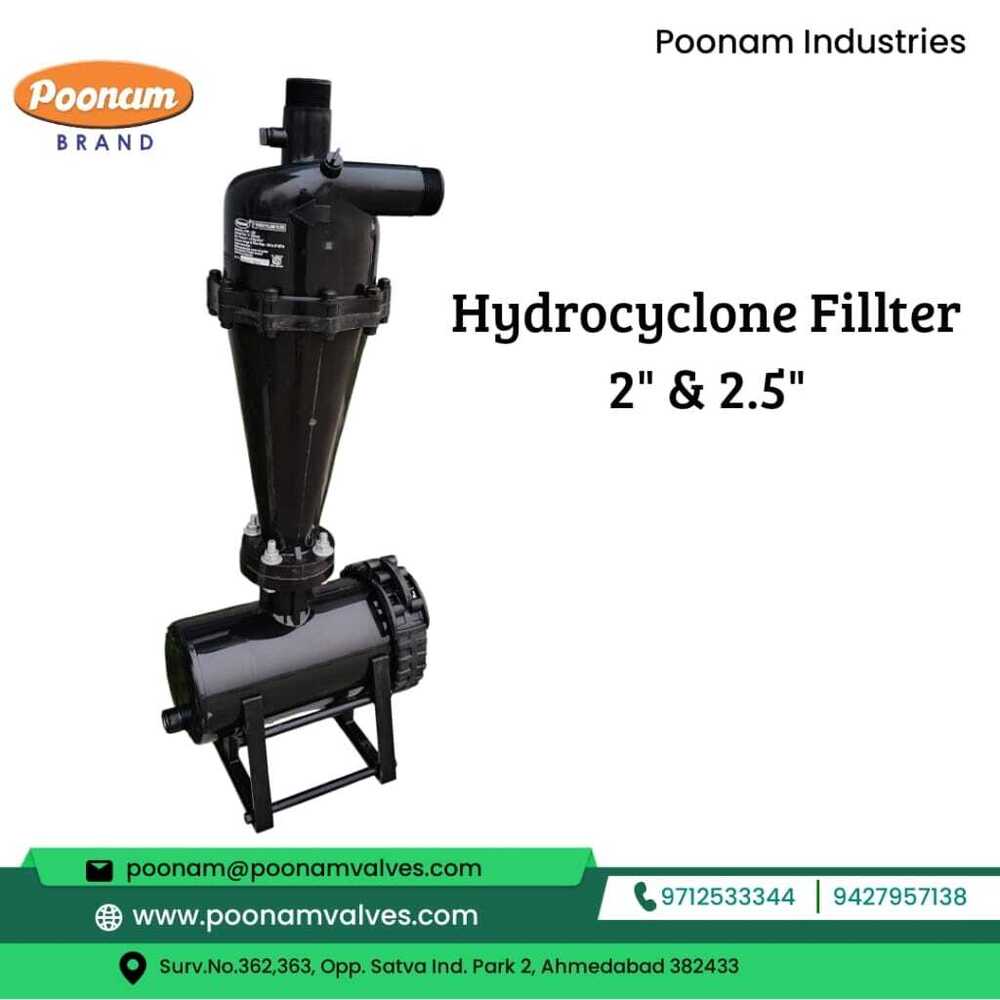
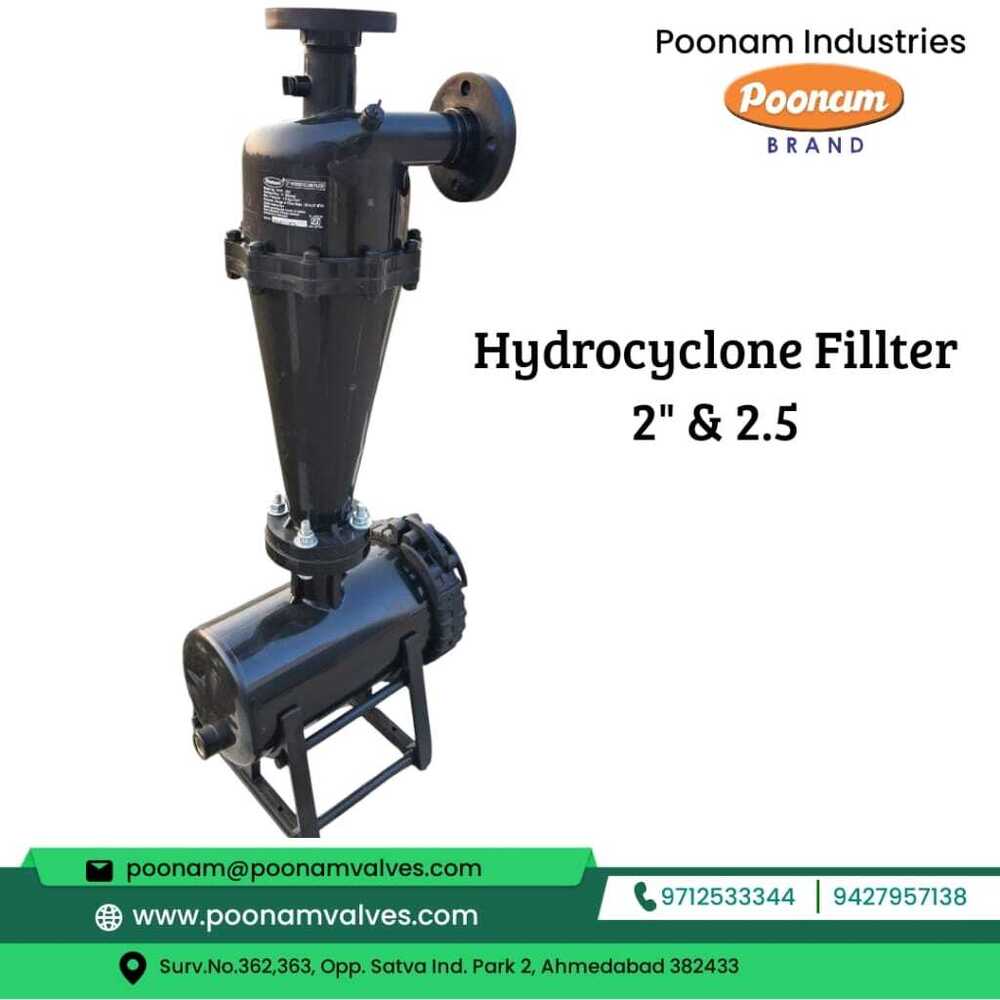
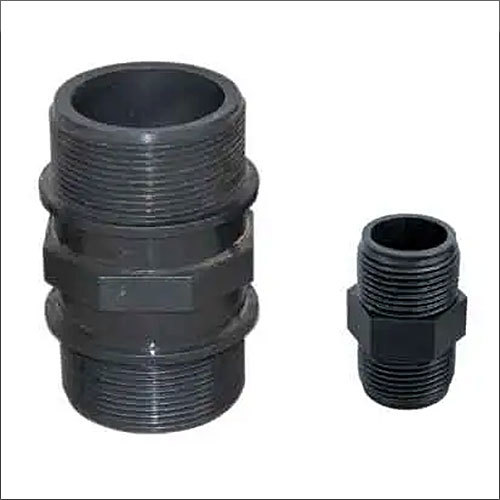
About PP HYDROCYCLONE FILLTER
- Heavy-duty hydrocyclone filter engineered to handle high-pressure operations. Perfect for industrial and agricultural use, ensuring reliable and clean water flow.
A durable and efficient hydrocyclone filter designed for separating sand and silt from water. Ideal for agricultural and irrigation systems.
Applications of Hydrocyclone Filters:
-
Agriculture & Irrigation:
- Drip Irrigation Systems: Removes sand, silt, and other impurities to protect drippers from clogging.
- Sprinkler Irrigation Systems: Ensures smooth operation by preventing blockage due to suspended particles.
- Fertigation Systems: Keeps fertilizers and nutrients flowing smoothly by filtering solid particles.
-
Industrial Use:
- Water Treatment Plants: Pre-filtration to remove solid impurities in industrial water systems.
- Effluent Treatment: Separates suspended solids in wastewater before further processing.
- Cooling Towers: Prevents clogging in cooling tower circuits by removing debris.
-
Construction and Mining:
- Sand Separation: Ideal for separating sand and sediment from water in mining operations.
- Slurry Filtration: Used in construction for cleaning and recycling water in concrete preparation.
-
Domestic and Municipal Use:
- Well Water Filtration: Removes sand and debris from borewell or well water.
- Municipal Water Supply: Pre-treatment filter for city water pipelines.
Let me know if you'd like this information in a promotional format or want to target specific industries.
Advanced Filtration TechnologyThe PP Hydrocyclone Filter employs advanced centrifugal force to efficiently separate solids from liquids. Its robust polypropylene construction ensures chemical resistance and long lifespan, making it a smart choice for challenging industrial processes. This technology minimizes maintenance while maximizing operational longevity.
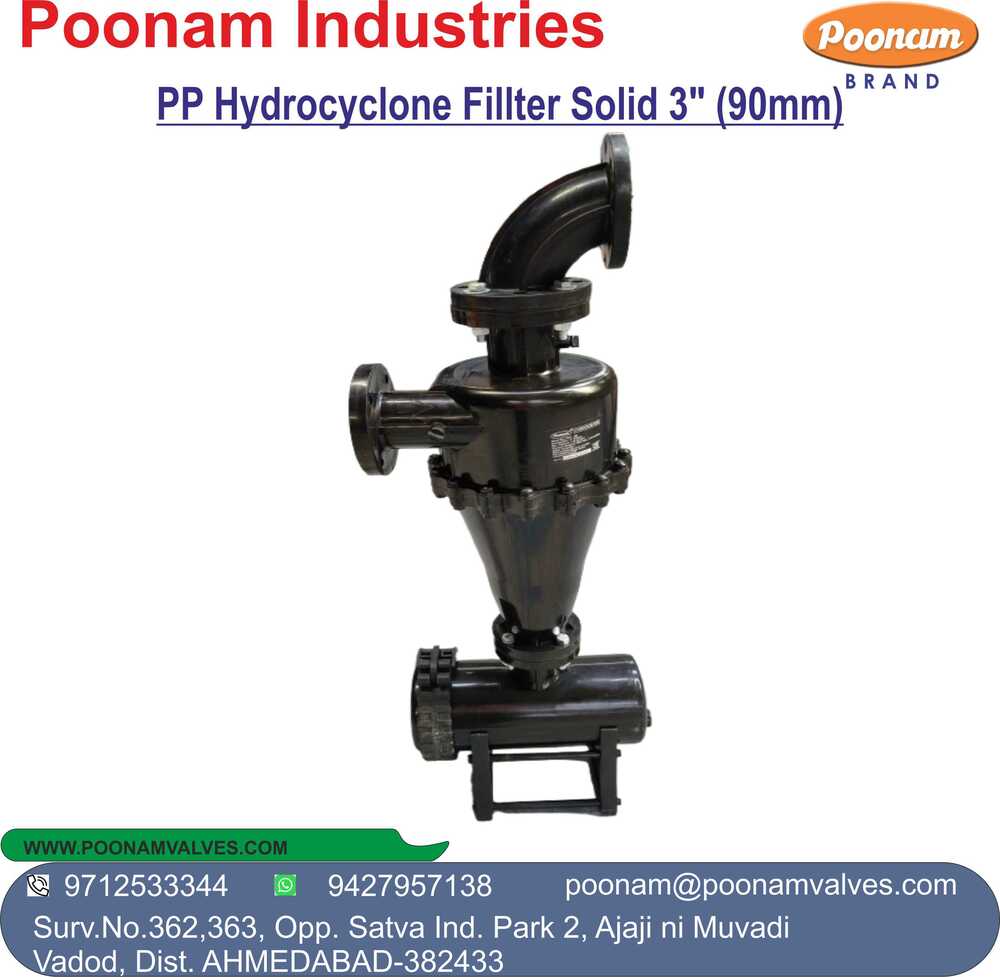
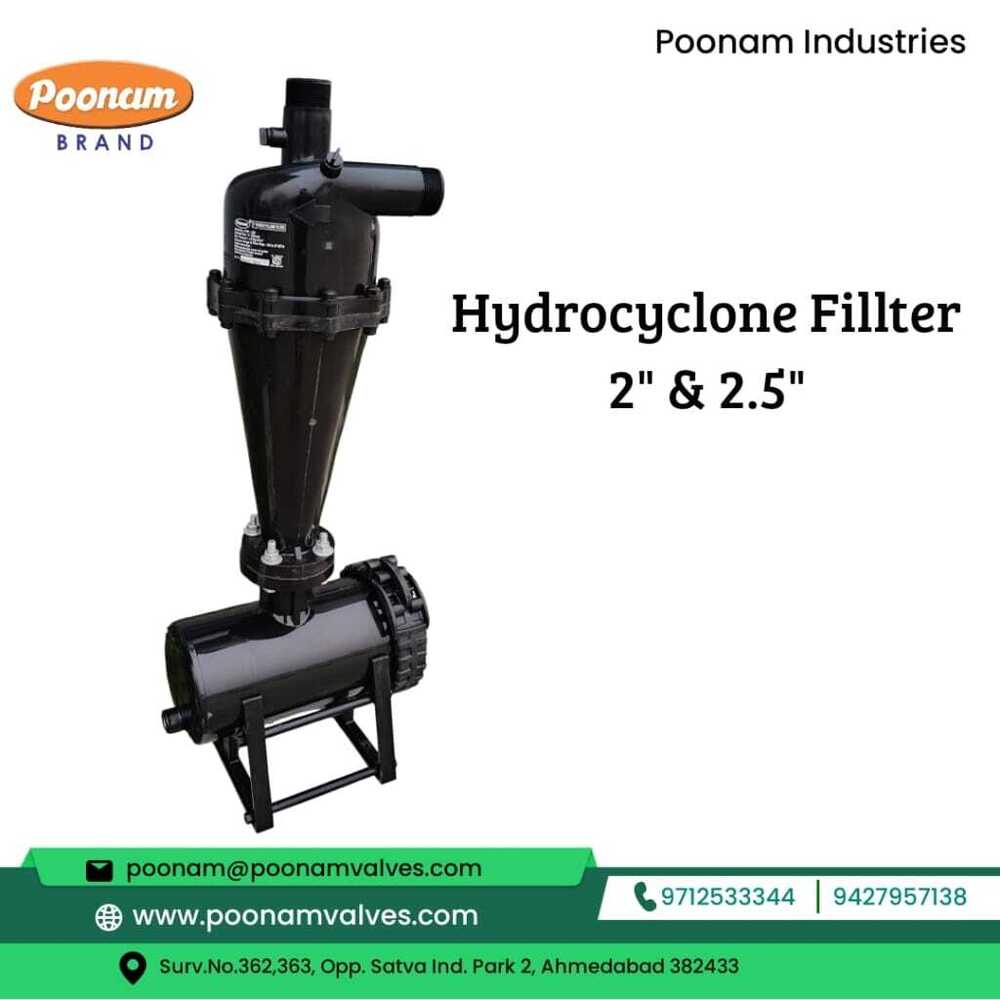
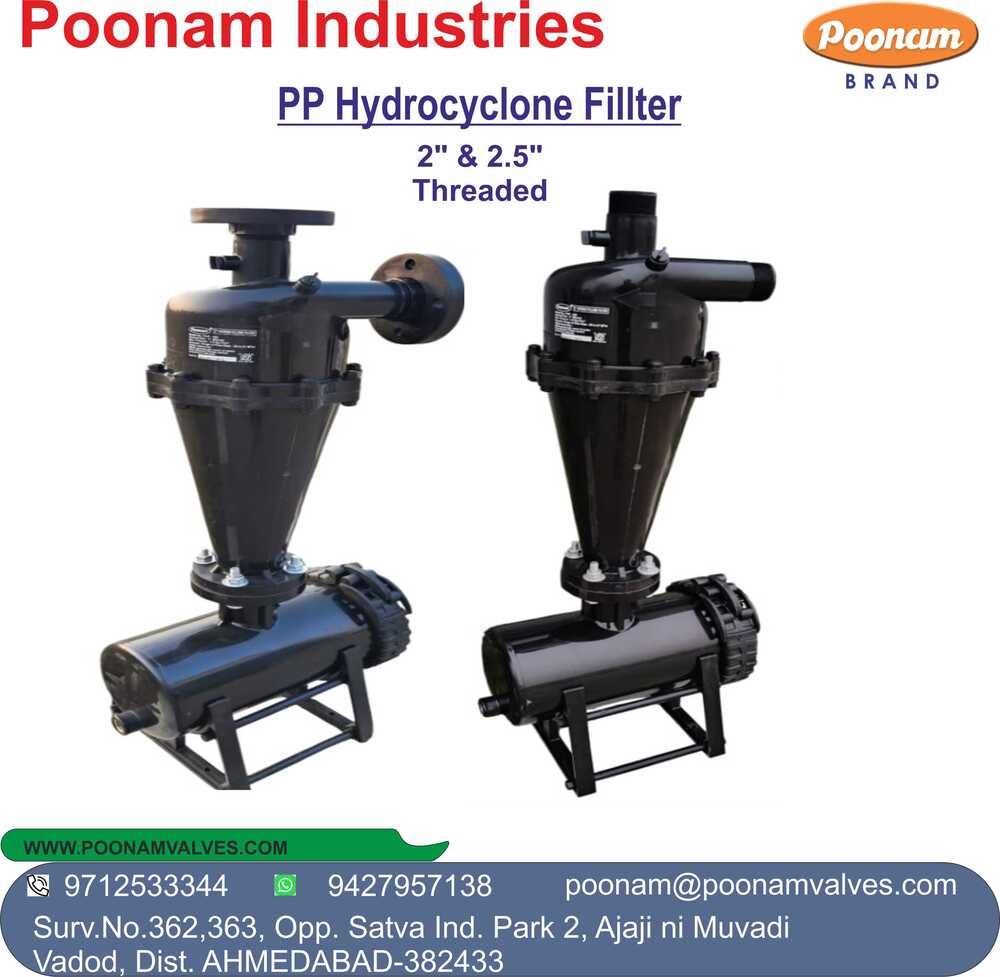
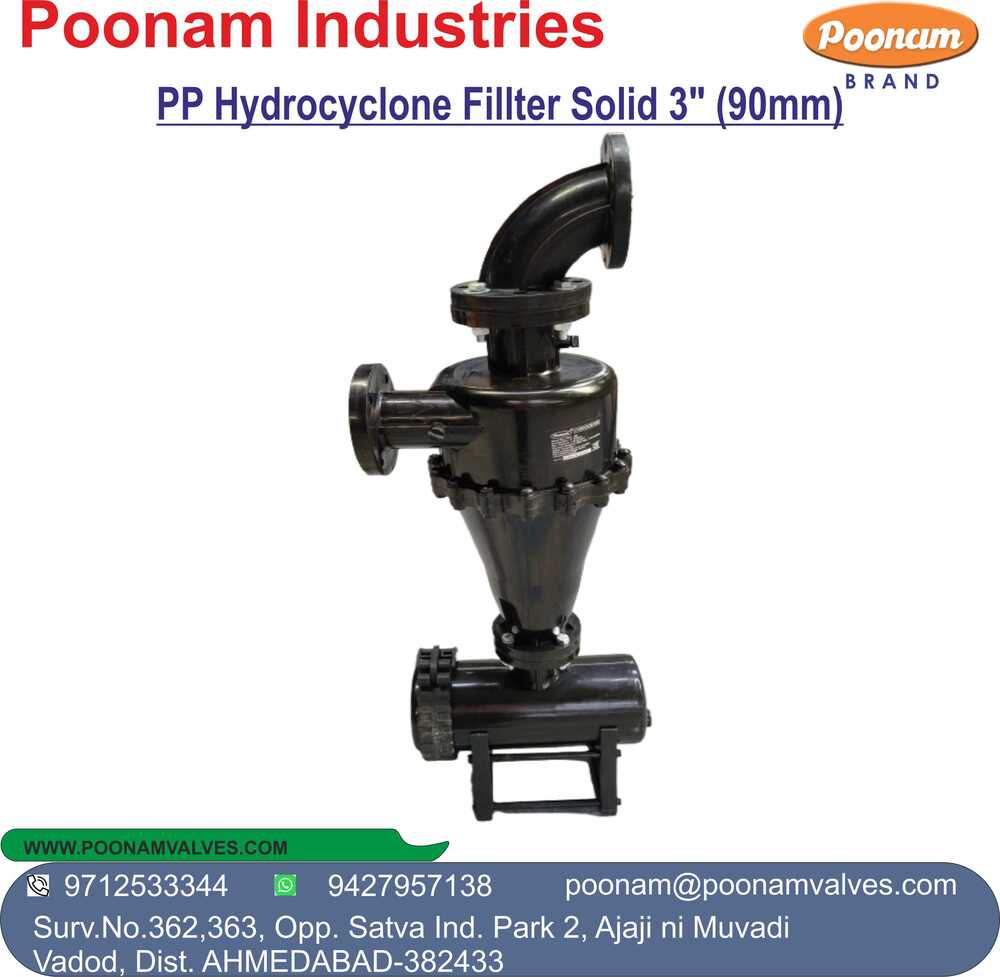
Multiple Sizes for Versatile ApplicationsAvailable in 2, 2.5, and 3 inch diameters, these hydrocyclone filters cater to various flow requirements and installation setups. This range of dimensions ensures compatibility with diverse pipelines and industrial systems, enhancing their versatility and effectiveness in different environments.
FAQ's of PP HYDROCYCLONE FILLTER:
Q: How does the PP Hydrocyclone Filter work in industrial applications?
A: The PP Hydrocyclone Filter operates by generating centrifugal force within its cone-shaped chamber, which separates solid particles from liquids. As the mixture enters the filter tangentially, heavier particles spiral outward and settle at the bottom, while clean liquid exits from the top, providing efficient particle removal in industrial systems.
Q: What are the primary benefits of using a hydrocyclone filter made of PP material?
A: PP (polypropylene) material offers excellent chemical resistance, durability, and lightweight properties, making it ideal for industrial use. These attributes ensure the filter remains corrosion-free, easy to handle, and suitable for harsh operating environments, leading to reduced maintenance and longer service life.
Q: When should a PP Hydrocyclone Filter be installed in an industrial system?
A: A PP Hydrocyclone Filter should be installed when there is a need for continuous separation of solid impurities from a fluid stream-especially in applications where minimal maintenance and high reliability are required. It is typically situated at the initial stage of a filtration process to protect downstream equipment.
Q: Where can these PP Hydrocyclone Filters be sourced in India?
A: These filters are widely available through certified distributors, exporters, manufacturers, suppliers, and traders across India. Companies specializing in industrial filtration equipment offer various models and sizes to match specific application needs.
Q: What is the process for maintaining a PP Hydrocyclone Filter?
A: Maintenance generally involves routine inspection and occasional removal of collected solids from the filter chamber. Since the PP material is resistant to most chemicals, cleaning is straightforward and the filter can be quickly returned to service, minimizing downtime.
Q: How does the diameter of the hydrocyclone filter affect its industrial usage?
A: The diameter of the filter (2, 2.5, or 3 inches) determines the flow rate capacity and efficiency of separation. Larger diameters are suitable for higher flow rates and volumes, while smaller models can be used for lower-flow applications, ensuring flexibility across different industrial setups.






 Send Inquiry


 Send Inquiry